There is a quiet, unspoken conflict in corporate hiring that wastes millions of applicant hours every year.
On one side, traditional career advisors insist that every single job application must include a custom, 4-paragraph cover letter formatted with formal address blocks, salutations, and personal narratives.
On the other side, recruiting analytics show that corporate technical recruiters spend an average of 6 to 7 seconds reviewing a candidate profile.
If a recruiter spends six seconds on your resume, how much time are they spending reading your cover letter?
The blunt answer: almost zero seconds.
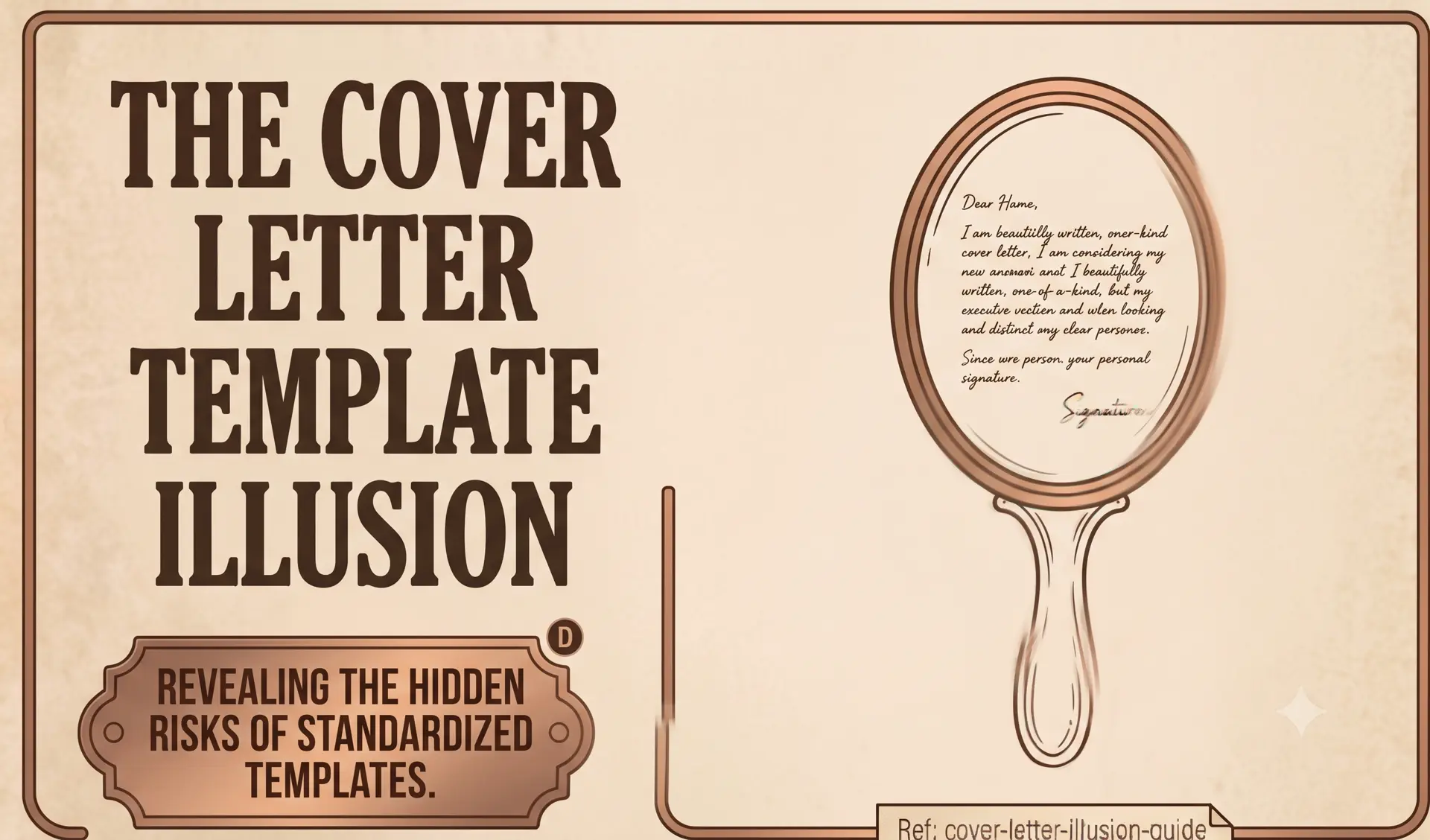
Does that mean cover letters are useless? Not entirely. But their actual purpose in modern hiring has completely shifted. The cover letter is no longer a literary exercise for humans; it is a secondary keyword-indexing mechanism for Applicant Tracking Systems and a risk-mitigation tool for specific candidate scenarios.
Here is the technical breakdown of how automated systems process cover letter attachments, and how to use a streamlined cover letter template that protects your time while optimizing your application score.
How Applicant Tracking Systems Index Cover Letters
When you upload a cover letter to an application portal (such as Greenhouse, Lever, or Workday), the system treats that document as an auxiliary data attachment linked to your candidate ID.
- The Global Search Index: When a recruiter runs a search across their internal database for specific skills (e.g., “Kubernetes AND AWS AND Security Clearance”), the ATS search engine crawls all indexed text fields. If a critical keyword is missing from your 1-page resume due to space constraints, having it present in your cover letter can surface your profile in search results.
- The Completeness Filter: Certain enterprise hiring workflows assign higher priority scores to “Complete Applications” where both a resume and an optional cover letter are submitted. Leaving the field blank can occasionally lower your profile’s priority ranking in high-volume queues.
When Does a Human Actually Read It?
Recruiters rarely read cover letters during the initial triage round. However, hiring teams do review cover letters in three specific situations:
- The Career Pivot: When your past job titles do not directly match the target role, a concise cover letter explains how your transferrable skills apply before you get filtered out.
- The Geographic Relocation: If you live in New York but are applying for an onsite role in Austin, a short note clarifying that you are actively relocating prevents an automatic rejection based on location.
- The Final Tie-Breaker: When two finalists have identical interview scores, hiring managers review the cover letter to gauge communication clarity and company alignment.
The Anatomy of a High-Conversion 150-Word Cover Letter
Stop writing multi-page essays detailing your childhood ambitions. Modern hiring managers appreciate brevity, clarity, and metrics.
A high-converting cover letter template follows a strict 3-part structure:
Header: Matches your resume header exactly (Name, Email, Phone, LinkedIn URL).
Paragraph 1 (The Hook & Value Proposition):
State the target role, your years of experience, and your core technical specializations in two direct sentences.Paragraph 2 (The Quantified Proof):
Three bullet points demonstrating measurable business outcomes:
• Spearheaded [Project/Initiative], resulting in a [X]% increase in [Key Business Metric].
• Engineered [System/Process] utilizing [Key Skill/Tool], reducing operational costs by [$X].
• Managed cross-functional workflows across [Team Size] stakeholders to achieve [Tangible Result].Paragraph 3 (The Strategic Alignment):
Two sentences connecting your specific background to the company’s current product challenges, followed by a professional sign-off.
The Golden Rules of Cover Letter Optimization
- Keep It Under 180 Words: If it cannot be scanned in 20 seconds, it will not be read.
- Maintain Visual Consistency: Use the exact same font, margins, and header hierarchy as your resume to present a cohesive application package.
- Focus on Value Delivered: Eliminate phrases like “This role would be a great learning opportunity for me.” Focus entirely on how your capabilities solve the employer’s operational problems.
Pair your cover letter with a machine-readable resume format created in our free resume builder. If you want to explore verified templates optimized for ATS parsers, browse our job-specific resume formats or read our complete Master ATS Guide.